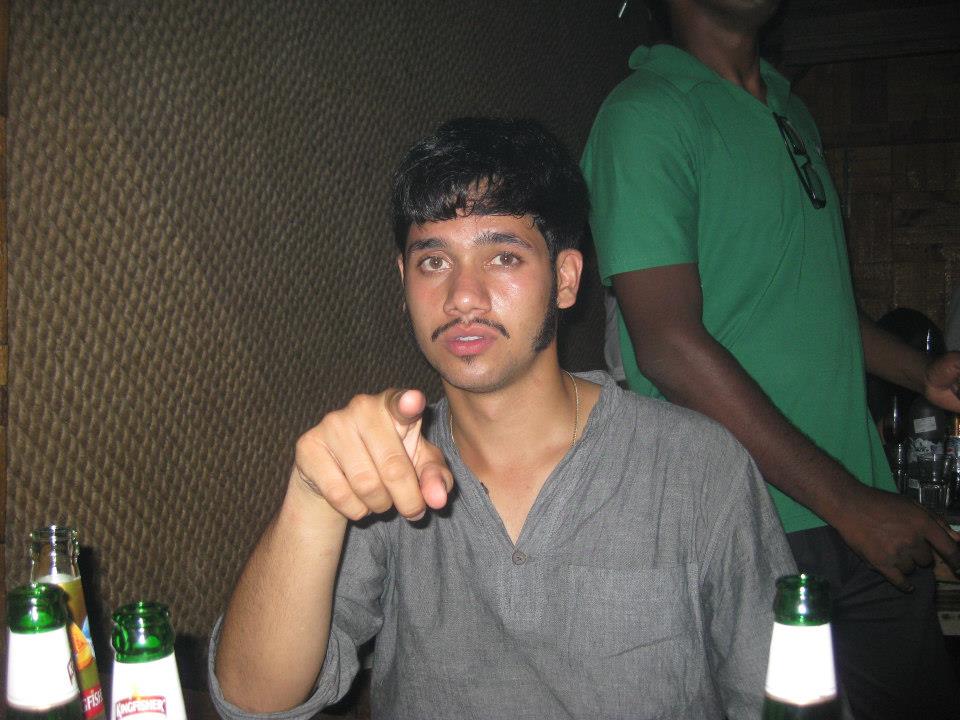
I grew up in a household of disciplined Yogis. From an early age I was taught to meditate, develop healthy habits and control my desires. I was raised to stay away from parties and I assimilated my parents’ belief that all drugs – including alcohol and tobacco – are bad. I took pride in being the only one among my friends who remained sober throughout his youth. And from the outside drugs really didn’t seem all too appealing.
My first time
But after years of being the social misfit who never drank I started to doubt my parents‘ dogmatic views against drugs. And so, one gloomy, humid night on a Delhi rooftop – I was 22 years old – everything changed. I was hanging out with a guy named Robin. I had only just met Robin but he immediately seemed smart, trustworthy, and immensely humorous. I confessed to him that I was curious to experience the effect of alcohol and form my own judgement. Robin used the right words to convince me that the right moment had come. I was far away from home, I had just started my first real job and it was all random enough to do something crazy. So we each had two glasses of Coca Cola with Old Monk rum – and I finally got to see what actually happens when one gets drunk.
What followed can only be described as a revelation. We went to a house party and for the very first time in my life I was able to enjoy myself at a social gathering. I could dance and actually feel the music. I could flirt with women (even in foreign languages) and I could laugh through the night with total strangers. For a moment I was able to forget my acne, my virginity and all the other insecurities that had infested my youth. For a moment, I could just be that guy at the party that I had always wanted to be: funny, bold, charming, expressive. Confident. I called my mother the next morning to tell her that I had discovered something powerful. It struck me so hard, I couldn’t hide it from anyone. I could not endorse the family tradition of abstaining from drugs anymore.
Setting the direction
During the following years I continued to research and experiment with all sorts of mind-altering substances. To my surprise, I kept finding benefits: Alcohol lowered my social anxiety, marijuana enhanced my creativity, LSD and mushrooms opened me up to a deeper spirituality.




But those experiences also always led back to another conclusion: Drugs could not solve my problems in the long run. Their immediate effect was intense but always short-lived and unstable. For a moment, psychedelics could make me feel like I understood the world. But in the next moment I could find myself stricken with existential fear. Alcohol and weed turned me into a shooting star at the dinner party. But the next morning my social anxiety was back again – and often stronger than before! MDMA made the pretty girl at the festival fall in love with my eyes. But when I found the same girl again during daylight a few hours later she didn’t even want to talk to me anymore.
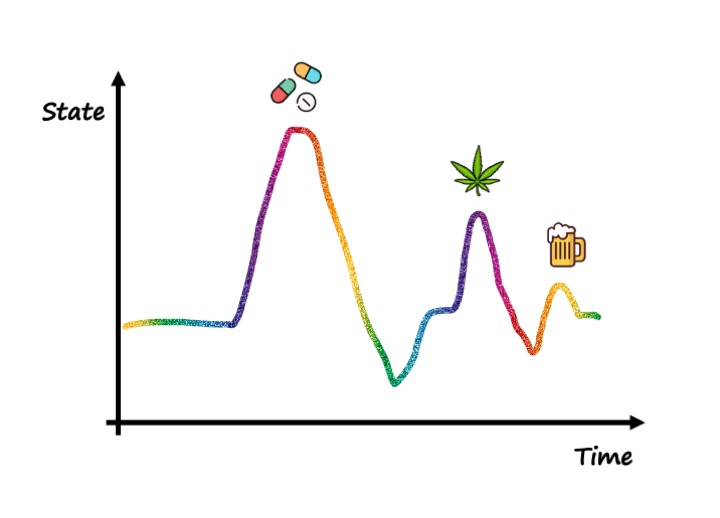
Drugs got me high but they couldn’t keep me there for long. And so they put me into a hamster wheel. I needed them again and again in order to keep experiencing the good stuff. I realized quickly that this was a form of dependence I couldn’t tolerate in my life. I wanted to raise my state sustainably, not just as a temporary result of consuming the right substance. I wanted to have creativity, relaxation, charme, spiritual insight and social freedom in the long run and not just for a volatile moment. So I set out on a mission to raise my baseline. It was a slow and difficult process. In the following I break it down into 3 intermediary steps and share the insights that helped me get through them.
My three-step program
The first step on my journey towards abstinence was to really understand what happened when I got high. I analyzed myself and asked: Why did I take the drug? What exactly is it that feels so good about it? And how could I make this happen without the drug? What I found out during these inquiries was this: Drugs did not turn me into a different person or create new behaviors. Instead, drugs just helped me feel good about and express myself the way I really was. They allowed me to release thoughts and emotions that were already inside of me but were suppressed in regular life. The jokes and stories I told when drunk were clearly jokes and stories I had already known. Without the alcohol I just would not have dared to tell them at a table with a bunch of strangers. Even the subtle spiritual insights and the love for the universe I felt on psychedelics had already been there. They had just been ignored and overpowered by other sensations in my daily life. Drugs didn’t create anything new, they just lowered the floodgates for whatever was already there to pour out. Once I understood that it became clear what I had to do in order to attain a higher baseline state on my own: I had to listen more closely to my feelings and thoughts and allow myself to express them more fully.
The second step was to go cold-turkey and get off of drugs entirely. I had experimented with a gradual reduction, a “just alcohol” or ”only on special occasions” policy. But when I still experienced those occasional spikes I was reminded too often of how easy it was to lift myself up with the help of drugs. Having a few beers always worked better in the short run, so I would find an excuse and take that shortcut again. The availability of a quickfix made it hard to justify the long and uncomfortable path of staying sober. In order to make progress, I had to make a clear cut. I decided that drugs were just not a part of my life anymore and that I would not consume anything at all. This forced me to stay sober at a party even when it felt super awkward initially. Make no mistake, it was painful to be the shy kid again who didn’t get girls. But I had to feel the discomfort so I could learn how to overcome it. Or as David Goggins would put it: You have to go to war, before you can find peace. And this time, thanks to the first insight from above, I knew how to win the battles: I simply gave myself permission to follow my impulses and be who I wanted to be. It took longer and required more conscious effort than swallowing a pill. But I got better at it every time! And when I still couldn’t get myself in the mood, I simply left the party or stayed at home in the first place. Staying sober made me much more picky about the kinds of experiences and social groups I signed up for. When I knew that I had to create a good vibe just from the conversation and my own psyche, I only chose people and places that actually made me happy.
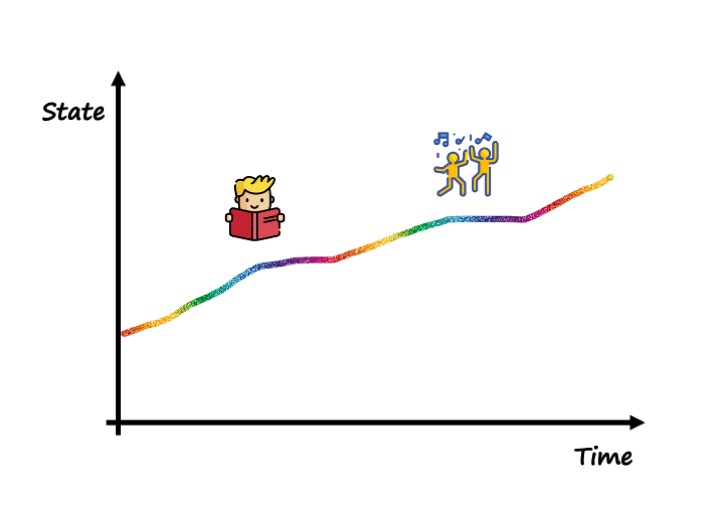
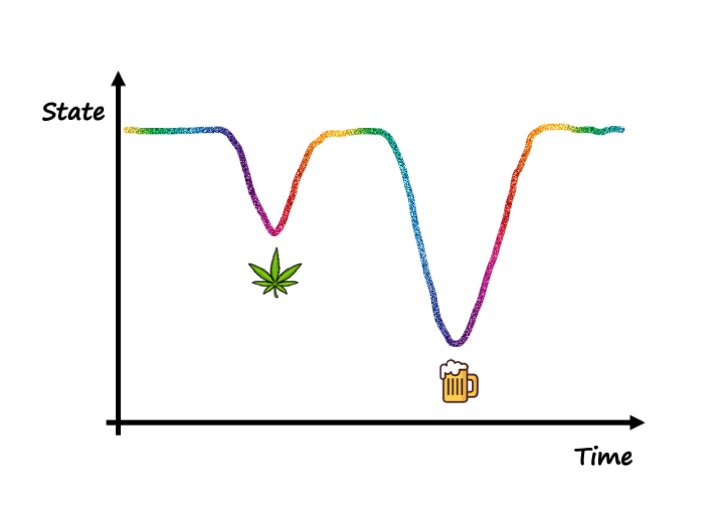
After around 2 years of abstinence I felt like I had learned how to express myself in social settings and managed to lose my dependency on alcohol. I didn’t feel drawn to drugs anymore and thought I stood above them now. So I decided that I could stop being an outcast weirdo, relax my straight-edge policy and allow myself to have a few drinks every now and then when it was conducive to the social situation. This is when the final step of my journey towards complete teetotalism occurred: I realized repeatedly that alcohol could not get me pleasantly high anymore! I would drink and get a bit more loose-mouthed but basically I didn’t feel much different under the influence from how I felt sober. To me, this was proof that I had really managed to lift my baseline up and build actual confidence. Now that I was already confident in my everyday life, alcohol didn’t add more confidence. It just made me a bit more careless and crude. So instead of getting me high, it actually pulled me down a bit!3 This was a massive realization and I think it translates to other drugs too: Drugs don’t necessarily get you high. They just get you to a certain level. If your baseline is already above that, they can actually bring you back down! And when you are on a sustainable baseline growth path those drug-induced sudden state spikes throw you off balance, disturb your routines and leave you confused. After understanding this, it was a no-brainer for me to stop using drugs forever. The only real benefit had vanished. It just wasn’t worth the time, energy and money anymore.
Implications for society
As I continued to participate in social life without drugs, I started to observe more clearly how much we as a society actually abuse them. I do believe that drugs can be extremely helpful in overcoming psychological barriers – they certainly have played an important role in my own life. But most people do not follow up with the psychological work that is required to consolidate those drug-induced phase shifts. I believe that this is one of the biggest pitfalls of modern society and one of the things that hold us back as a species. Let me expand further on this macro-societal perspective:
For many people the only way to be socially confident and have fun with a group is through alcohol and drugs. Instead of facing their social fears and overcoming them, they numb themselves and take the shortcut to pleasure. They never build actual confidence and social skills so they become dependent on the drug, consuming it over and over again. This exposes them heavily to the adverse health risks that many of these substances pose. They pay for their happiness and sociability with reduced health. And society as a whole also pays for it through reduced productivity and disease.
The dependence of social life on alcohol and drugs also has severe implications for the way humans interact in public spaces. In the typical modern city of the West, people mostly remain silent and solitary when they are out during the day. Only during nightlife does our world become more interactive and exciting, because everyone is buzzed. Picture a reality where people are expressive and playful and funny not just at night after a few drinks, but at all times of the day! If people learned to be confident and social without drugs, we could have a lot more fun during commutes, shopping trips and while waiting at the traffic light on the sidewalk. It’s hard to imagine but I believe it would be a better world. Especially because sober social behavior is less likely than drunken social behavior to get out of control and turn aggressive or disrespectful.
This brings us to another important disadvantage of using alcohol and drugs for social interaction: While drugs can serve as a social lubricant and initially make our communication more smooth, after a certain threshold they can also do the opposite and cripple our ability to socialize. A little buzz usually helps in connecting casually with new people, but if you get too drunk you probably shouldn’t be interacting with anyone at all because you become uncontrolled and unable to respect boundaries. Too often people fall into this trap and keep drinking past the point where they are safe and responsible agents. This causes a lot of discomfort, psychological damage and also serious crime. Drugs and people who abuse them make nightlife dangerous.

This brings us to my final argument against drugs as a social technology. Be warned though – this is where it gets a bit esoteric. Drugs screw with the most fundamental force in the animate world: our sexual energy. If there is one thing that defines parties and nightlife around the world it is sex and the search for love. Every dance hit is about that. After all, our deeply hardwired desire to have sex with desirable partners and pro-create is the force that creates life and propels humanity forward on a biological level. Alcohol is often used because it can help build the courage to approach potential partners and appear attractive to those partners. But it does so by numbing our senses and strengthening the primitive, animalistic tendencies inside of us. It makes us forget rational considerations in favor of our sexual instinct. I believe that sex and rationality should not be separated like that. They should go together. The tension between men and women is something magical that we should learn to express naturally with full consciousness rather than in a hazy delirium. It is the primary life force and should be celebrated and cherished with our minds instead of being drowned in pure physicality and released quickly.
Despite all arguments against alcohol and drugs the world is still far from abandoning these powerful substances. One of the main reasons that repeated drug use is still being tolerated and promoted is that it boosts consumption. In the short run, businesses do not care if humans raise their baseline and become confident from within. In a capitalistic world order, businesses benefit from people being unhappy, developing unhealthy habits and needing products to fill the gap. Alcohol and drugs are the ultimate hedonic products. They provide a shortcut to make us feel good through the mere act of consumption and without having to do anything difficult. The nightlife industry sells them to us as something normal and desirable because every time we get high, they earn. And when we get sober again and our world sucks again, we come rushing back for the next round. It’s about time we recognize this as a toxic boom and bust cycle that spurs business in the short run but lets individuals stagnate.
Conclusion
I do not think that drugs are bad altogether. An occasional, well-planned experience can be an amazing eye-opener. It can take you to extreme highs and lows and it can do so much faster than anything you could achieve on your own. But drugs can only open the door for a short time and give you a glimpse of what’s on the other side. If you want to go through the door and remain there, you have to start training your mind and that is hard work. It means giving up on some spikes in favor of slow and steady progress. I cannot say that this path is as exciting and adventurous as the roller coaster ride of intense highs and lows. But if you care more about long-term growth then it is the path I recommend.
Footnotes
- Title pictures shows my face at a bar in Hauz Khas (Delhi) the second time I ever got sloshed.
- Icons in the drawings made by Freepik from www.flaticon.com
- Thanks to Moritz Winter for helping me make this realization.
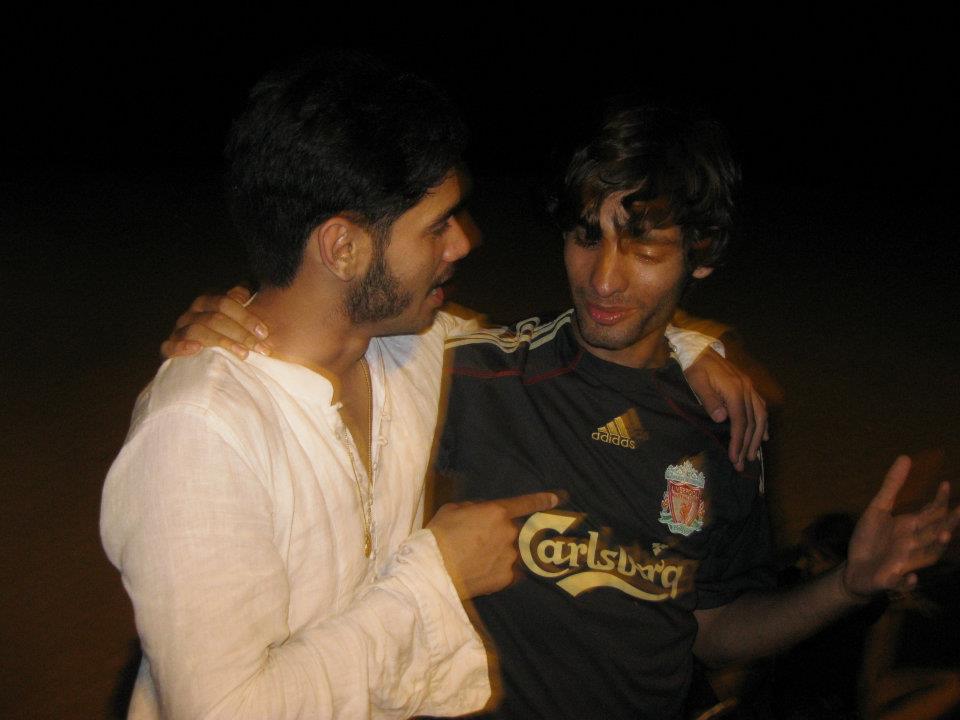
- Photograph also by Moritz Winter
 Achill Rudolph